Why an Undated Calendar Might Be Your Best Productivity Tool
Most of us have experienced that odd disconnect at the start of a new year—ripping off the December page, flipping to January, and realizing the dates don't match your actual life. Maybe you receive a beautiful planner as a gift, only to find it sits unused because you started it in March. Or you run a business where your fiscal year doesn't align with the calendar year. These frustrations point to a simple truth: traditional dated calendars assume everyone's timeline works the same way. An undated calendar solves that problem by putting control back in your hands.
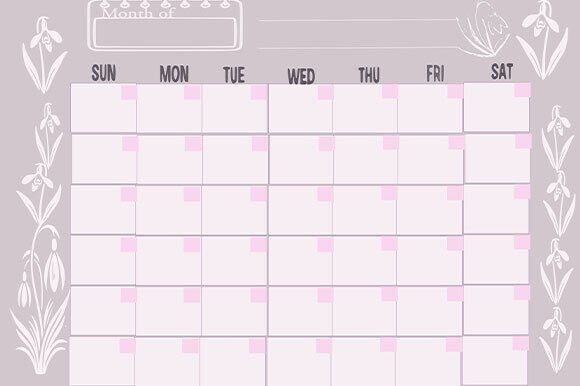
At its core, an undated calendar is exactly what it sounds like—a calendar framework without pre-printed dates, months, or years. You fill in the dates yourself, which means you start whenever you want, skip weeks when nothing happens, and adapt the layout to your actual rhythm rather than forcing your schedule into someone else's grid. This flexibility makes it a surprisingly powerful tool across many contexts.
What Makes an Undated Calendar Different?
The key distinction between dated and undated calendars isn't just about writing in numbers. It's about ownership. A dated calendar arrives with its own logic: weeks start on Sunday or Monday, months contain a fixed number of days, and the year runs January through December. An undated calendar asks you to impose your own structure. That shift from passive recipient to active designer changes how you engage with planning.
Most undated calendars use one of several common formats. Weekly spreads give you seven blank sections per page. Monthly layouts offer a grid you populate with day numbers. Daily pages provide space for detailed scheduling. Some combine multiple views. The best ones include extra blank pages for notes, project lists, or habit tracking. The specific format matters less than how well it matches your workflow.
A well-designed undated calendar also tends to use higher-quality materials than its dated counterparts. Because it's meant to last beyond a single year, manufacturers often use thicker paper, sturdier binding, and more durable covers. This isn't universal, but it's a trend worth noting if longevity matters to you.
Practical Benefits That Go Beyond Flexibility
The obvious advantage of an undated calendar is that you can start using it any day of the year. But the real value runs deeper.
Zero wasted pages. When you buy a dated planner in October, you effectively pay for three months you'll never use. With an undated calendar, every page is usable from the moment you open it. You skip periods of low activity without guilt. You don't stare at blank weeks wondering why you bothered.
No pressure to stay caught up. Dated calendars create a subtle psychological burden. When you miss a week, you either leave it blank or go back and fill it in retroactively. Either option feels defeating. An undated calendar lets you simply move to the next clean spread. No gaps, no reminders of lost time.
Perfect for irregular schedules. Freelancers, shift workers, parents, and creatives rarely follow a Monday-to-Friday routine. An undated calendar accommodates irregularity naturally. You can designate Wednesday as your planning start day, or skip weekends entirely, or create a weekly spread that spans Thursday to Monday. The structure serves you, not the other way around.
Reusability and cost efficiency. While you technically can't reuse pages you've written on, you can repurpose an undated calendar for different contexts across its lifespan. Use the front half for work projects and the back half for personal goals. Or dedicate one section to a seasonal planning cycle and another to ongoing habit tracking. A single undated calendar can serve multiple purposes that a dated planner never could.
Real-World Applications Across Different Contexts
Let's look at how different people actually use undated calendars, because the theoretical benefits only matter if they translate into real workflow improvements.
For Professionals and Entrepreneurs
A marketing consultant I know runs her entire client management system through a single undated weekly calendar. She fills in client deadlines as they come, not according to a monthly grid. Each week gets its own spread, and she assigns color-coded tabs for different accounts. When a project wraps, she removes the tab and moves on. There's no end-of-year scramble to transfer data to a new planner. She just keeps going.
Business owners often use undated calendars for quarterly planning cycles. Instead of forcing their strategy into January-through-December thinking, they start fresh with each business quarter. This aligns naturally with how most companies actually operate—reviewing performance, setting goals, and adjusting priorities every three months.
For Creatives and Hobbyists
Writers and artists frequently keep undated calendars as project trackers rather than time managers. A novelist might use monthly spreads to track word count targets, marking each day's progress without worrying about what day of the week it falls on. A photographer could use weekly spreads to plan shoots around weather and client availability, ignoring traditional month boundaries entirely.
This is where the undated calendar shines brightest: it separates when something happens from how much you accomplish. For creative work, that distinction matters enormously.
For Educators and Students
Academic calendars rarely align with the standard year. A teacher starting lesson planning in August needs a system that begins when the school year begins. An undated calendar allows that. Students use them to track semester schedules, assignment deadlines, and exam periods without wasting pages on summer months they'll never reference.
I've seen graduate students use undated daily spreads for thesis work, filling in only the days they actually research or write. The blank spaces don't represent laziness—they represent legitimate off days. The calendar records reality, not aspiration.
For Digital and Hybrid Use
Not everyone wants a paper calendar, and many people combine digital tools with physical ones. An undated calendar works well as a weekly planning anchor in a hybrid system. You print blank weekly spreads, fill them in by hand, then scan or photograph them for digital reference. The lack of fixed dates means you can print exactly as many spreads as you need, when you need them.
Some undated calendars come as printable PDFs specifically designed for this workflow. Others are physical books meant to sit on a desk. Neither approach is better—they serve different preferences.
What to Look For When Choosing an Undated Calendar
Not all undated calendars are created equal. Here are practical considerations that separate useful ones from frustrating ones.
Layout density. Some undated calendars cram too much information onto each page, while others waste space. Think honestly about how much detail you actually write. If your entries are brief and task-oriented, a compact weekly spread works. If you tend to write notes, brainstorm, or journal alongside your schedule, look for a spacious daily or weekly format with margin room.
Paper quality. If you use fountain pens, markers, or anything wetter than a ballpoint, thin paper will bleed through and ruin the back of the page. Look for paper weight of at least 100 gsm for most pens, or 160 gsm if you use heavy ink. Also check whether the paper is off-white or bright white—personal preference matters here, but off-white is generally easier on the eyes for extended use.
Binding type. Spiral binding lets the calendar lie flat, which is essential for writing comfortably. Lay-flat binding achieves the same effect with a more polished appearance. Stitched or glued bindings can work if the calendar is designed to stay open, but many cheap options snap shut the moment you let go. Test this before committing.
Extra pages and sections. The best undated calendars include dedicated spaces for notes, project lists, goal setting, and reflection. These extras transform a simple scheduling tool into a comprehensive planning system. If you only need dates, skip the extras. But most people benefit from having a few blank pages tucked into the back.
Size portability. A5 is the sweet spot for carrying in a bag comfortably while still offering enough writing space. B6 fits in a pocket but limits detail. A4 stays on a desk and works best for detailed planning or team use. Choose based on where you'll actually use the calendar most often—there's no wrong answer, but there is a wrong size for your specific context.
Observations From Long-Term Use
After watching dozens of people adopt undated calendars, a few patterns emerge. First, people who struggle with consistency often benefit from the reset mindset. There's no concept of "falling behind" with an undated calendar. You just fill in today and move forward. That psychological shift reduces planning anxiety significantly for many users.
Second, undated calendars tend to get more personal over time. Because they lack pre-printed dates, owners feel more permission to customize them. Stickers, washi tape, doodles, and personal annotations appear more frequently than in dated planners. The calendar becomes an expression of personality, not just a productivity tool.
Third, the best undated calendars are used irregularly and that's fine. Some weeks get heavy use. Others get skipped. The calendar doesn't judge. This acceptance of real human behavior makes undated calendars more sustainable than rigid dated systems that demand daily attention.
A Few Practical Cautions
Undated calendars aren't perfect for everyone. If you need strict chronological tracking for billing, compliance, or legal reasons, a dated system makes verification easier. If you thrive on the structure of pre-printed dates and feel lost without them, an undated calendar may frustrate more than it helps.
Also, be honest about your willingness to fill in dates. Some people find this tedious and eventually abandon the calendar. If you know you're unlikely to sit down and write "Monday 14" on every page before you use it, consider a dated alternative or a hybrid system where you fill in dates a month at a time rather than all at once.
Finally, avoid the trap of buying an undated calendar as a solution to procrastination. No calendar, dated or undated, fixes poor planning habits on its own. The tool enables better habits—it doesn't create them.
Making the Switch
If you're curious about trying an undated calendar, start small. Buy one with minimal features and a small time commitment. Use it for a single project or a single month. Pay attention to how it feels when you're not bound by pre-printed dates. Notice whether you fill it in more honestly or less. Recognize whether the flexibility liberates you or leaves you unmoored.
The undated calendar works best for people who want planning to serve their actual life rather than squeezing their life into a planner's rigid framework. It acknowledges that time doesn't always cooperate with January first. And in a world that demands constant adaptability, that acknowledgment might be exactly what your planning practice needs.